

When players arrive in the EIHL or NIHL from North America, they bring more than speed and experience. They bring habits, expectations and a clear idea of what professional hockey is meant to look like. One of the most visible points of friction around EIHL neck guards is cultural rather than practical. Despite new rules making neck protection mandatory, some NHL imports still struggle to accept a change that challenges long-standing ideas about toughness and identity in the sport.
That resistance now sits uncomfortably in British hockey. After the death of Adam Johnson during an EIHL match in October 2023, British ice hockey moved quickly to mandate neck guards during any and all on-ice activities. The EIHL followed in 2024. What had long been optional became compulsory, almost overnight.
The league acted because it had to.
But rule changes do not erase culture.
Hockey and Neck guards – a brief history:
Neck guards have existed in ice hockey for decades, but the sport has never treated them as standard equipment at the professional level. Junior leagues in parts of Europe normalised neck protection early, but North American systems did not.
Players grew up watching elite professionals skate without neck guards. Over time, that absence became expectation. If the best players in the world did not wear them, many assumed they were unnecessary.
Even after several serious skate-related injuries, the NHL avoided mandating neck protection. It framed the decision as personal choice. Over years, that choice hardened into habit. Wearing a neck guard became a statement rather than a norm – arguably a reflection of the USA’s obsession with individuality and freedom.
Players have acknowledged this openly. Vancouver Canucks captain Quinn Hughes said neck guards “haven’t been something that people wear”, adding that players would adapt if the league mandated them. The issue was never ability. It was familiarity.
Others pointed to appearance. Brendan Gallagher admitted players “just don’t like the look of them”. His honesty shows resistance often comes from identity, not performance.
Comfort still gets cited. Players talk about restriction or distraction. At elite level, small changes feel magnified. But equipment has evolved. Modern neck guards are lighter, thinner and more flexible than older designs. The technology moved on. The mindset did not.
Some players who adopted neck protection early report the opposite effect. Buffalo Sabres goaltender Devon Levi, who has worn a neck guard throughout his career, said it made him feel more protected and “a little bit looser” on the ice. The equipment did not hold him back. It removed a worry.
Why EIHL imports struggle with neck guards
For players arriving in the EIHL from the NHL or North American systems, the shift feels sudden. Habits formed over years do not disappear when a rulebook changes.
Hockey culture values conformity. Veterans set the tone. Imports learn quickly what stands out. In that environment, wearing unfamiliar equipment can feel isolating, even when it is mandatory.
The NHL’s historical approach reinforced that mindset. Until recently, the league left neck protection to individual choice. That inconsistency shaped expectations. Connor McDavid has spoken about how some players wear cut-resistant gear while others wear very little. That variation exists because the league never forced alignment.
That is now changing. Under the new NHL collective bargaining agreement, all players entering the league from the 2026–27 season must wear cut-resistant neck protection. Existing players can opt out under a “grandfather” clause. The NHL chose gradual reform.
The EIHL did not have time for gradualism.
Adam Johnson’s death forced immediate action. The league could not wait for culture to shift naturally. It set a rule. Everyone followed it. The speed of that change explains much of the discomfort; culture always lags behind regulation. There have even been stories of players wearing cut up strips of fabric to appear as though fully protected.
There is also a masculinity problem baked into this resistance. Hockey has long rewarded silence, pain tolerance and stoicism. A fast-paced, high-stakes sport like hockey tends to do that. Players learn early that showing vulnerability risks judgement, and safety equipment can get unfairly lumped into that category. Neck guards, in particular, sit close to the throat, one of the most visibly “exposed” parts of the body. Protecting it can feel like admitting fear, even when the risk is real.
That mindset does not come from individual weakness. It comes from a sporting culture that still equates toughness with how much danger a player appears willing to accept. Refusing extra protection becomes a performance of masculinity rather than a rational choice. In that context, discomfort with neck guards makes more sense. They challenge not just habit, but identity.
Other sports have lived through this moment before.
Formula One met strong resistance when it introduced the halo cockpit device. Drivers questioned visibility and appearance. Some argued it damaged the sport’s identity. Others felt that it ruined the aesthetic of the cars. Then the halo saved lives. The debate ended.
Rugby resisted head injury assessments. Football resisted concussion substitutes. American football resisted helmet reform. Each time, safety arrived before acceptance. Each time, the sport adapted.
The EIHL now sits in that same space.
As more players wear neck guards, they stop standing out. As younger players enter the league having worn them throughout junior hockey, resistance fades. What feels unfamiliar becomes routine. What feels awkward becomes normal.
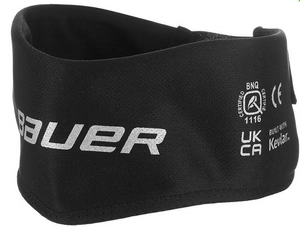
The upcoming Winter Olympics will accelerate that shift. Neck guards will be mandatory on the biggest stage in the sport. NHL players will have to wear them throughout any games representing their country, on a stage where they have been absent from since 2018. The pressure on them to perform adds to the stakes. Including neck guards for the first time sets a precedent. When the world’s best players adapt without issue, arguments about elite performance lose their force.
The EIHL has already crossed the hardest line. It chose safety over tradition. The rest is adjustment.
The question is no longer whether neck guards belong in professional hockey. That question was answered painfully and publicly. The real issue is how quickly the sport lets go of outdated ideas about toughness.
Because real toughness has never been about refusing protection. It has always been about adapting, surviving, and making sure everyone skates off the ice.
Leave a Reply